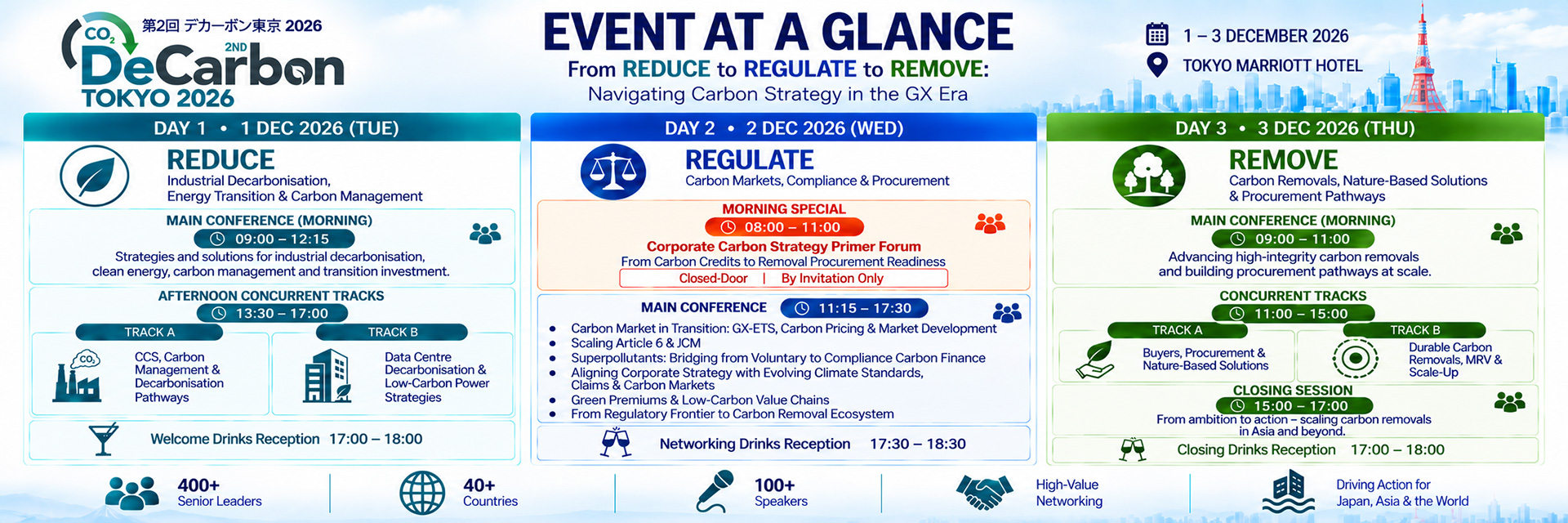
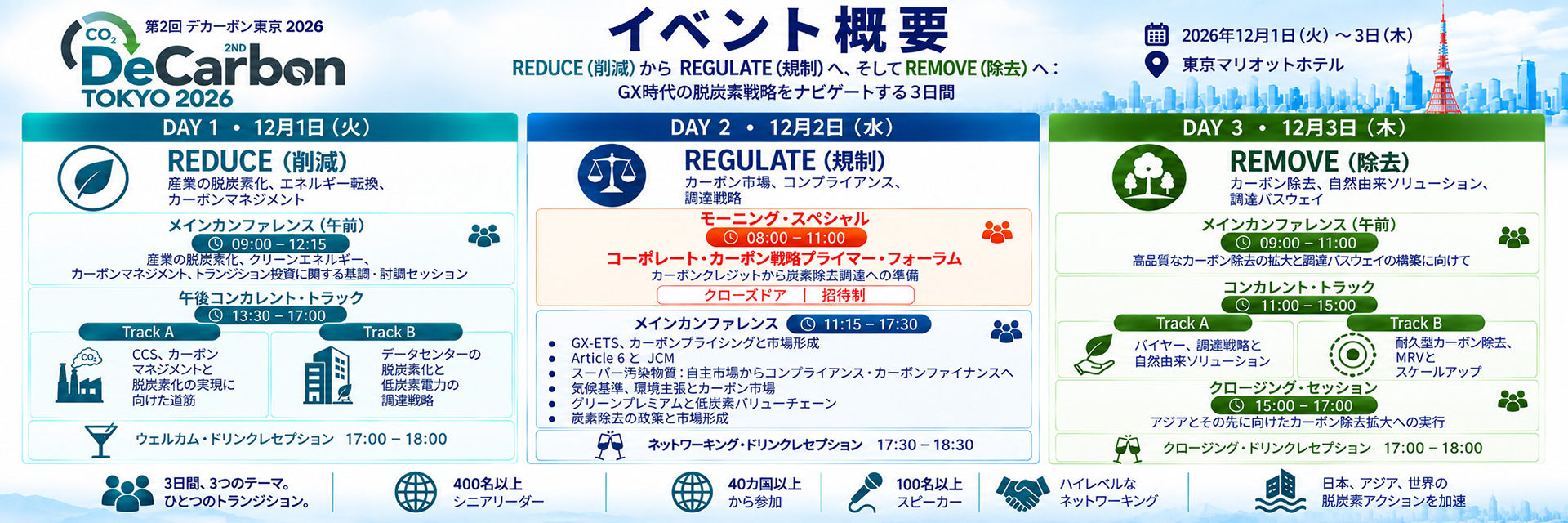
01-03 Dec, 2026
Tokyo, JAPAN
Tokyo Marriott Hotel
Tokyo Marriott Hotel































Translate this Page
CMT has arranged special discounted room rate at JPY 47,234 nett (Superior King / Deluxe Twin) per room per night not including breakfast (subject to room & rate availability) for conference delegates at Tokyo Marriott Hotel.
*Rates are strictly applicable to registered delegates only.
Please reserve your room with hotel via this link. Ensure CORP/PROMO CODE is indicated as A9236.
Breakfast can be added upon check in @ JPY 4500 nett/meal
Stay period: 29 Nov – 5 Dec
Cancellation Policy: 7 days 100%
Should you require any assistance with room reservation, please contact:
Reservation cut off date :28-11-2026

11-12 Nov, 2026 - Casablanca

17-19 Nov, 2026 - Ho Chi Minh City

24-25 Feb, 2027 - Hanoi

Send email to


If you are a start-up or a small local company & wish to attend - contact

Submit your

Attend with a team of 3 or more at special discounted fee
Accelerating Industrial Decarbonisation Through Clean Energy, Carbon Management & Emerging Technologies




How can protecting forests and other critical ecosystems complement industrial emissions reductions by safeguarding existing carbon stocks while delivering wider climate, biodiversity and community value?
Moving Japan's Carbon Management Ambitions from Demonstration to Commercial Scale
How does CCS fit within Japan's wider industrial decarbonisation strategy, and what policy, infrastructure and investment conditions will be required to move towards commercial deployment?
Drawing on Japan's emerging CCS projects, this session examines the practical journey from demonstration towards commercial-scale capture, transport and permanent storage.

Mr. Takeo Kissei, Manager, Strategy & Business Planning Group, Low Carbon Solutions Division
Inpex Japan Ltd
As CCS value chains increasingly involve multiple companies and jurisdictions, how should captured, transported and permanently stored CO2 be accounted for, and who can legitimately claim the resulting emissions reduction?
The session will:


Where can captured CO2 become a commercially useful feedstock, and which utilisation pathways offer credible opportunities alongside permanent geological storage?


Mr. Robin Hüdepohl, Head of Decarbonisation Management & Carbon Dioxide Removal (CDR) Sales
E.ON Energy Projects GmbH
Moving CCS from demonstration to commercial deployment will require more than storage capacity. What needs to align across infrastructure, cross-border CO2 transport and storage, regulation, carbon accounting, risk allocation, financing and industrial demand?

Ms. Mari Igarashi, Manager, Upstream Energy & Offshore Wind
Tokio Marine & Nichido Fire Insurance Co., Ltd.
Co-Organised with

As AI accelerates electricity demand, how can Japan expand digital infrastructure while managing grid constraints, energy security, cost and increasingly ambitious decarbonisation requirements?

What clean-energy procurement options are realistically available to data-centre operators in Japan today, and how could the market progress towards more continuous, location-matched carbon-free electricity?
What coordination is needed between data-centre operators, utilities, grid stakeholders and clean-energy providers to support rapid digital growth without compromising reliability or decarbonisation?
How are more established data-centre markets addressing grid connections, clean-energy availability and the accelerating electricity requirements of AI infrastructure—and which lessons are relevant to Japan and Asia?
Clean electricity is central to data-centre decarbonisation, but it is not the whole solution. How should AI companies, hyperscalers and data-centre operators combine energy efficiency, clean-power procurement, infrastructure investment and high-integrity carbon removal into a credible net-zero strategy?
Co-Organised with

Carbon credits are an important component of credible corporate net-zero strategies. Companies need to complement emissions reductions with solutions for addressing residual emissions. Carbon credit markets are continuing to grow, supported by both compliance frameworks and voluntary corporate demand.
Growing demand for high-integrity climate solutions is accelerating interest in CDR. CDR is increasingly recognized as a critical component of credible long-term net-zero strategies. Companies should begin building market knowledge and procurement capabilities today to prepare for future participation in the CDR market.
Successful CDR procurement requires both a clear strategic rationale and strong internal stakeholder alignment. Procurement outcomes depend heavily on the selection of projects, technologies, and contractual structures. Early movers offer valuable lessons for companies developing their own carbon removal procurement strategies.
Effective CDR procurement requires rigorous assessment of technologies, project developers, and MRV approaches. Contract design plays a critical role in managing risk and maximizing value. Lessons from early buyers can help organizations navigate procurement challenges and avoid common pitfalls.
Companies can access carbon removals through a range of procurement models, including direct procurement, intermediaries, and buyer coalitions. Each model presents different trade-offs in terms of cost, risk, flexibility, and resource requirements. Organizations should select a procurement pathway that aligns with their strategic objectives, internal capabilities, and procurement maturity.
Understand how experienced buyers evaluate, prioritize, and make CDR procurement decisions. Learn practical lessons from both successes and challenges faced by early market participants. Provide Japanese companies with actionable insights for taking their first steps into the carbon removal market.
Navigating Carbon Compliance, Market Mechanisms & Corporate Climate Claims in a Multi-Market World
As carbon-pricing frameworks across Asia enter a new phase, this session examines how policy ambition translates into functioning carbon markets. From Japan’s GX-ETS to developments in China, Korea, Taiwan and Singapore, what can policymakers and companies learn from different approaches to pricing carbon, building market participation and developing credible, liquid markets?

Institute for Global Environmental Strategies (IGES)
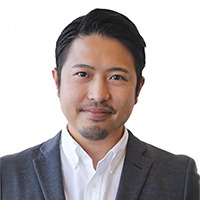

• Navigating the Emerging Carbon Credit Landscape: JCM, Article 6 & Voluntary Markets
Moderator & Panel:


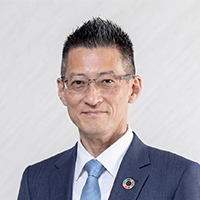
Mr. Masaaki Nagamura, General Manager International Initiatives / Fellow, International Initiatives
Tokio Marine & Nichido Fire Insurance Co., Ltd.
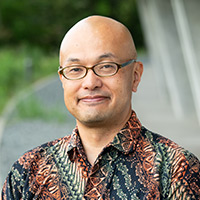
Institute for Global Environmental Strategies (IGES)
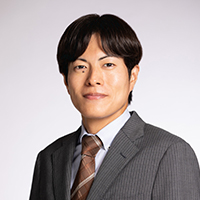

Moderator & Panel



As climate standards, disclosure requirements and market frameworks such as SBTi, CORSIA, VCMI and evolving carbon-credit guidance reshape corporate climate strategies, how should companies navigate an increasingly complex landscape?
The panel will focus on how companies align climate commitments with credible carbon-market participation, build robust procurement strategies, manage regulatory and reputational risk, and communicate climate claims with confidence.
• State of the Voluntary Carbon Market: Demand, Integrity & Market Evolution
Panel
Moderator & Panel

Mr. Mitch Kobayashi, Head of Corporate Sustainability Group
Yusen Logistics Global Management Co., Ltd.

Mr. Dai Miyata, GM, Zero-Emission Shipping Strategy Team, Corporate Sustainability Division
Mitsui O.S.K. Lines Ltd. (MOL)
Europe is establishing one of the first regulatory frameworks specifically addressing certified carbon removals and carbon farming. As the EU CRCF moves from framework to implementation, what lessons and signals could it offer for Japan as it develops its own carbon removal ecosystem?
This session examines how certification, policy, corporate demand, technology, finance and international market development could come together to support a credible and scalable CDR market in Japan, and how emerging frameworks such as the EU CRCF may ultimately interact with wider regulated and voluntary carbon markets.
Moderator & Panel:

Institute for Global Environmental Strategies (IGES)
From Climate Commitments to Permanent Carbon Removal: Building the Next Generation of Carbon Markets
Carbon removal is moving beyond pioneering purchases towards a broader market. What must happen across supply, demand, finance and policy for the sector to reach meaningful scale?

Setting the context for Day 3 and the emerging role of carbon removals within corporate net-zero strategies and global carbon markets.

Why are companies beginning to buy carbon removals, how are procurement decisions being made, and what determines which pathways, suppliers and contract structures buyers are willing to support?
Where can Asia-Pacific deliver credible nature-based climate solutions at scale, and which ecosystems, markets and enabling conditions offer the strongest opportunities?
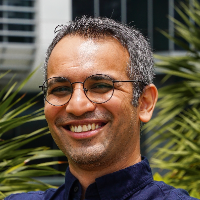
Centre for Nature-based Climate Solutions (CNCS)
As corporate climate strategies evolve, how should avoided emissions, conservation, restoration and nature-based removals coexist within the future carbon market?
Centre for Nature-based Climate Solutions (CNCS)
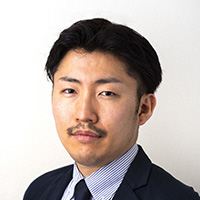
Mr. Yuki Nakamura, Manager, Green Strategy Promotion Dept, Raw Materials & Purchasing Div
Nippon Paper Industries Co., Ltd.
Why cross-market eligibility, the opportunity to issue credits in multiple markets, is key to projects that are resilient to market volatility and how funders can build this into their risk management processes.


How can nature-based solutions be structured as an institutional asset class, using project finance mechanics that separate offtake from financing, build bankable capital stacks against long-term contracted revenue, and unlock the deeper pools of infrastructure and credit capital that today sit on the sidelines of carbon markets?


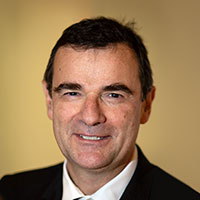
What role could mangroves, seagrass and other coastal ecosystems play within Asia's carbon and nature strategies, and what is required to develop credible blue-carbon markets?
How are companies evaluating nature-based solutions across geographies and project types while balancing integrity, climate impact, biodiversity and corporate objectives?
Moderator & Panel:

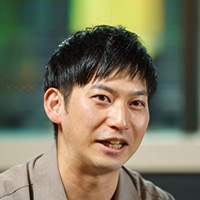
Mr. Yuki Katsumura, Japan Country Manager
Sylvera
Where does durable CDR supply stand today, which pathways are progressing towards commercial deployment, and how could the global technology portfolio evolve towards 2030?
How can biochar, BECCS and other biomass-based pathways move towards commercial scale while addressing feedstock economics, sustainability, infrastructure, MRV, bankability and Asia's potential role in supply?
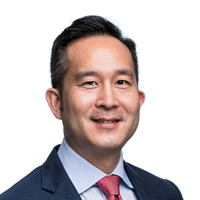
Mr. Barclay Rogers, Chief Executive Officer
Graphyte


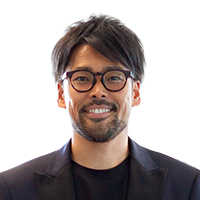
What will bring down the cost of DAC, enhanced rock weathering and emerging CDR pathways, and where can technology innovation, deployment, MRV and early buyer demand accelerate the journey from first-of-a-kind to commercial scale?
Panel:
Can a tonne of DAC, biochar, BECCS, ERW or other CDR genuinely be compared with another, and how should buyers evaluate differences in measurement, durability, permanence and delivery risk?
Panel:

As durable carbon removal moves from early deployment towards commercial scale, the challenge is no longer just proving the technology, but securing the capital, credible demand and infrastructure needed to deliver at scale.
This panel examines what it takes to move projects beyond pilots and final investment decisions, exploring bankable offtake agreements, innovative financing structures, risk allocation and the conditions needed to attract institutional investment. What must change to bridge the gap between today's megatonne-scale market and the gigatonne-scale removals required in the decades ahead?
Panel:


Mr. Samuel Alterescu, Joint General Manager, Sustainability Advisory
Sumitomo Mitsui Banking Corporation (SMBC)
Nature-based and durable removals carry different risks, but buyers face the same fundamental challenge: how can insurance, contracts and risk allocation provide confidence that purchased removals will actually be delivered?
Bringing the three-day conference together, what must change across integrity, corporate demand, finance, policy and market infrastructure for nature-based and durable removals to scale, and where should Japan position itself within this emerging global market?


DISCLAIMER
It may be necessary for reasons beyond CMT's control to alter the form, content, timings, dates or venue of an event. CMT will not accept liability for any kind of disruptions or any claims whatsoever, and in such instances CMT's normal cancellation terms apply.